“We’ve got the treats, tools, and tea.”
— Deirdre Bennett
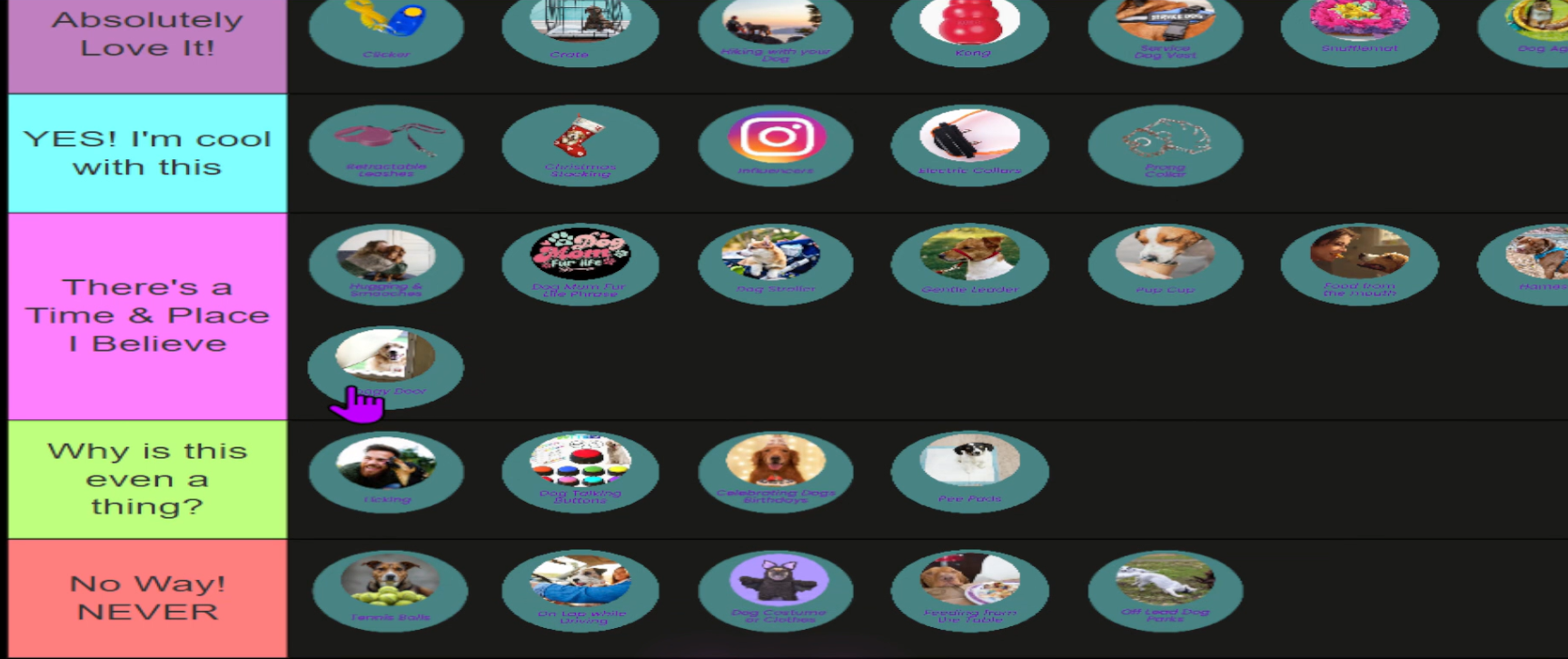
Viral Dog Trends - Unpacked & Ranked
Short videos, real dog psychology, and practical takeaways you can actually use. Each chapter includes the trend video, the dog’s point of view, what it can create, what to do instead, and the final rating.
NDTF Accredited • Cert IV Vet Nurse • 10+ years experience • Gawler South, SA
If you wouldn’t allow it from a guest, don’t ignore it in your dog.”
— Deirdre Bennett
Jump to a section
Pick the section that matches what you’re dealing with right now — and jump straight in.
What you’ll find in each chapter
The trend (video)
The dog’s POV (what it feels like for them)
My take (the missing context)
What it can create (behaviour + emotional impact)
What to do instead (a practical swap)
Final rating (so you know where I land)
Training Tools & Gear Trends
Tools aren’t “good” or “bad” — they’re communication. In this section I break down what each tool can teach your dog, when it helps, when it backfires, and what to use instead.
Chapter 01: CLICKER
Using a clicker to mark the exact second your dog does the right behaviour, then following it with reinforcement.
Absolutely love it ⭐⭐⭐⭐⭐
The Trend: Using a clicker to mark the exact second your dog does the right behaviour, then following it with reinforcement.
Dog POV: That click tells me exactly what earned the reward. It bridges the gap between the moment I got it right and when you deliver the treat/play/praise.
My Take: As a trainer, I’m a fan. It’s a great tool for precise timing and clear communication. I don’t personally use it constantly, but in the right situation it’s brilliant. For some clients, it can be “one more thing” to juggle — so I’ll only use it when it helps the dog and the human.
What it can create:
Clearer learning (less confusion, more accuracy)
Better timing from owners (massive win)
Faster progress when teaching new skills
Do this instead (or do it better):
Pair it first: click → reward, repeat until your dog lights up at the sound
Click the exact moment (then reach for the reward)
Use whatever your dog finds motivating: treat, play, or a good scratch
If a clicker feels like too much, use a consistent marker word — timing still matters
Want help applying this to your dog? Book a consult.
Chapter 02: CRATES
Crate training: teaching your dog that a crate is a safe, calm space — not a punishment.
Absolutely love it ⭐⭐⭐⭐⭐
The Trend: Crate training: teaching your dog that a crate is a safe, calm space — not a punishment.
Dog POV: A properly introduced crate gives me a clear “safe haven” where I can switch off. It’s a predictable space in a human world that can feel chaotic.
My Take: Love them. More people need to crate train properly. When introduced correctly, crates provide a safe retreat, help dogs rest and process after training, and give them a clear boundary that everyone in the household can respect.
What it can create:
A safe retreat zone (especially helpful in busy homes)
Better rest and recovery after training/exercise
Clear boundaries: “this is my space”
What to do instead:
Introduce gradually and positively — never force or “shut them in and hope”
Use it as a calm-down and processing space after training
Make it inviting: comfortable bedding, appropriate chews, calm placement
Teach the household: crate time means the dog is left alone
Want help applying this to your dog? Book a consult.
Chapter 03: RETRACTABLE LEASHES
Using retractable leads to give dogs more roaming distance on walks.
Yep, I’m cool with it ⭐⭐⭐⭐
The Trend: Using retractable leads to give dogs more roaming distance on walks.
Dog POV: More freedom can feel good — if the lead is managed well. If it’s chaotic, I’m learning to ignore guidance and make my own choices.
My Take: As a training tool, they can be useful — especially for nervous dogs where we want forward movement without constant pressure. The problem is they’re misused constantly: dogs wandering into people, no lock used, and too much freedom in high-distraction environments.
What it can create:
Dogs practising “do whatever I want” in public
Increased reactivity in busy environments (because there’s no structure)
Unsafe situations around roads, people, and other dogs
What to do instead:
Use the lock function properly and keep the length appropriate
Use them intentionally (confidence-building, controlled exploration)
For most everyday walking: choose a standard lead for clearer communication
Want help applying this to your dog? Book a consult.
Chapter 04: GENTLE LEADERS
Head collars used to manage pulling by controlling the dog’s head.
Time & place ⭐⭐⭐
The Trend: Head collars used to manage pulling by controlling the dog’s head.
Dog POV: If it’s fitted and introduced properly, it can feel like clear guidance. If it’s slapped on without training, it can feel frustrating and aversive.
My Take: It can be a useful tool in the right situation, with the right dog and the right client. I see it promoted a lot without proper education, which leads to misuse. I use it more as a management tool than a behaviour modification tool.
What it can create:
Safer handling for some owners (strength mismatch)
Reduced pulling while it’s on (management)
Frustration and resistance if introduced poorly
What to do instead:
Fit it correctly and condition it gradually
Don’t use it as a “quick fix” — still teach loose lead skills
If you’re unsure, get professional guidance so it’s fair and effective
Want help applying this to your dog? Book a consult.
Chapter 05: ELECTRIC / SHOCK COLLARS
Remote collars used to communicate at a distance, often misunderstood as “just punishment”.
Yep, I’m cool with it ⭐⭐⭐⭐
The Trend: Remote collars used to communicate at a distance, often misunderstood as “just punishment”.
“Check your local laws and work with a qualified trainer”
Dog POV: If it’s used at an appropriate level and paired with clear direction, it can interrupt a reaction and help me re-focus. If it’s used harshly or randomly, it’s confusing and unfair.
My Take: Controversial, but I’m cool with it when used appropriately. Many collars have different settings and can be used at very low levels — more like a stimulation tool (think TENS-style) than what people imagine. They can be useful for distance work and specific cases. They’re not for every dog, and education is non-negotiable.
What it can create:
A way to communicate at distance (when you can’t physically guide)
A pattern interrupt for certain reactions (then redirect)
Serious fallout if misused (fear, confusion, escalation)
What to do instead:
Use only with professional guidance and a clear training plan
Start low and fair — never use it out of frustration
Always follow with direction: interrupt → capture attention → redirect
Want help applying this to your dog? Book a consult.
Chapter 06: SERVICE DOG VESTS
Service dog vests — and the wider trend of people buying vests to label pets as service dogs.
Absolutely love it ⭐⭐⭐⭐⭐
The Trend: Service dog vests — and the wider trend of people buying vests to label pets as service dogs.
Dog POV: A real service dog is trained to cope with intense environments and ignore distractions. A vest doesn’t magically give me that skill.
My Take: I love service dogs and what they do for their people. What I don’t love is people mislabelling their dog to get access to places — it gives genuine service teams a bad name and puts everyone at risk. A vest should represent training, reliability, and public access manners.
What it can create:
Better access and support for people who genuinely need it
Public mistrust when vests are misused
Unsafe situations if untrained dogs are taken into high-pressure environments
What to do instead:
If your dog isn’t a service dog, don’t label them as one
If you want that level of access, commit to proper training and standards
Advocate for real service teams by respecting the purpose of the vest
Want help applying this to your dog? Book a consult.
Chapter 07: PRONG COLLARS
A training collar designed to provide clear, evenly distributed pressure cues.
Yep, I’m cool with it ⭐⭐⭐⭐
The Trend: A training collar designed to provide clear, evenly distributed pressure cues.
“Check your local laws and work with a qualified trainer”
Dog POV: Clear communication is fair — if it’s used correctly. Random or harsh corrections aren’t.
My Take: As a balanced trainer, I’m cool with it in the right situation. It’s a shame it’s been banned in some places because, used correctly, it can reduce stress and shorten the time it takes to redirect behaviour. It’s not a tool for everyone, and it’s not something you “wing”.
What it can create:
Clearer feedback for some dogs/handlers
Safer handling in certain cases
Harm and fallout if misused or used without education
What to do instead:
Don’t use without professional coaching
Pair with teaching: the tool supports learning, it doesn’t replace it
If it’s not legal where you are, use alternative tools with a proper plan
Want help applying this to your dog? Book a consult.
Chapter 08: HARNESSES
Harnesses for walking — including “no-pull” styles.
Time & place ⭐⭐⭐
The Trend: Harnesses for walking — including “no-pull” styles.
Dog POV: A well-fitted harness can feel comfortable for certain activities. Some “no-pull” designs can feel restrictive and frustrating.
My Take: Harnesses are broad. A good harness can be useful as a management aid, but it’s not automatically a behaviour modification tool. I’m not a fan of many front-attach “no-pull” designs because of how they can restrict movement and create frustration. Harnesses are great when used for what they’re designed for.
What it can create:
Comfortable management for certain dogs
More pulling if the dog already has a pulling habit (because it doesn’t teach)
Frustration with restrictive designs
What to do instead:
Choose a well-fitted harness that allows natural movement
Don’t expect it to “fix” pulling — teach loose lead skills
Use harnesses for appropriate contexts (e.g., pulling sports, certain activities)
Want help applying this to your dog? Book a consult.
Chapter 09: MUZZLES
Muzzle training — teaching dogs to happily wear a muzzle when needed.
Absolutely love it ⭐⭐⭐⭐⭐
The Trend: Muzzle training — teaching dogs to happily wear a muzzle when needed.
Dog POV: If I’m trained properly, a muzzle isn’t scary — it’s just equipment. If it’s forced on me in a stressful moment, it becomes a problem.
My Take: I love muzzles and I strongly believe every dog should be muzzle trained — regardless of size or temperament. You never know when a muzzle will be required (injury, pain, vet procedures). Proper training reduces stress and helps everyone stay safe.
What it can create:
Safer vet visits and emergency handling
Less stress during injury/pain situations
Better public safety and owner confidence
What to do instead:
Train it gradually and positively — don’t “chuck it on”
Choose a safe, well-fitted muzzle that allows panting (and ideally drinking)
Practise when life is calm, so it’s easy when life isn’t
Want help applying this to your dog? Book a consult.
Chapter 10: HUGGING AND SMOOCHES
People hugging their dog, kissing their face, cuddling tightly — filmed as “cute bonding moments”.
The Trend: People hugging their dog, kissing their face, cuddling tightly — filmed as “cute bonding moments”.
Dog POV: Dogs don’t naturally see hugging as affection. Pressure over the shoulders can feel like a threat — it’s similar to how dogs go “over the top” of each other in conflict or control. Some dogs tolerate it because they’re used to humans… not because they love it.
My Take: This is where I clash with myself: as a dog lover, hugs feel good. As a trainer, I know most dogs don’t enjoy the act of hugging. If you’re going to do it, it should be invited (dog opts in), never forced, and never done by children.
What it can create:
Missed warning signs (freeze, head turn, lip lick, whale eye)
A dog that learns they can’t escape handling
“Out of nowhere” reactions that actually had plenty of warnings
Do this instead:
Invite closeness; don’t lean into the dog’s space
Keep it brief and low-pressure (side-on contact > face-to-face)
Teach kids: no hugging dogs — ever
Learn the signs you’re being tolerated vs welcomed
Want help applying this to your dog? Book a consult.
Time & place ⭐⭐⭐
Affection & Handling Trends
Affection should feel safe for the dog, not just nice for us. These trends look sweet online, but body language and consent matter more than vibes.
Chapter 11: LICKING
Letting dogs lick faces (and constant licking in general), often called “kisses”.
Why is this a thing? ⭐⭐
The Trend: Letting dogs lick faces (and constant licking in general), often called “kisses”.
Dog POV: Licking is usually appeasement: “I’m not a threat”, “I’m unsure”, “I’m trying to calm this down.” It’s communication — not automatically affection.
My Take: In context, I’m not a fan. The odd tongue touch doesn’t bother me, but repetitive licking? I discourage it quickly. And as a vet nurse: face licking is unhygienic — the bacteria load can be high.
What it can create:
Reinforced anxious/appeasing behaviour (licking becomes the go-to response)
Escalation into frantic, repetitive habits
People missing what the dog is actually saying
What to do instead:
Allow the occasional lick if you truly don’t mind — but don’t reward constant licking
Redirect to a calmer behaviour (sit, place, toy, chew)
If it’s repetitive, look at stress and arousal levels, not “affection”
For face licking: set a boundary and be consistent
Want help applying this to your dog? Book a consult.
Chapter 12: ON LAP WHILE DRIVING
Letting your dog sit on your lap while you drive.
No way. Never. ⭐
The Trend: Letting your dog sit on your lap while you drive.
Dog POV: I’m unsecured and unstable. If something happens suddenly, I’m the one who gets hurt — and I can become a projectile.
My Take: This one makes me cringe. On public roads: no. Dogs should be secured for safety. In an accident, a proper car harness connected to the seatbelt can save your dog’s life. A neck restraint can put dangerous pressure on the neck.
What it can create:
Serious injury or fatality risk in an accident
Driver distraction and reduced control
A dog that learns the car is a free-for-all
What to do instead:
Use a quality car harness and secure it with the seatbelt
Avoid neck restraints for crash safety
If you’re on private property at very low speeds, each to their own — but on roads, restrain your dog
Want help applying this to your dog? Book a consult.
Chapter 13: DOG CLOTHES & COSTUMES
Dressing dogs in outfits and costumes for novelty (events, photos, trends).
No way. Never. ⭐
The Trend: Dressing dogs in outfits and costumes for novelty (events, photos, trends).
Dog POV: This isn’t natural for me. It can restrict movement, change how I regulate temperature, and add pressure I didn’t ask for.
My Take: I’m not a fan of novelty clothes and costumes. I’ve indulged on occasion, and I didn’t feel like my dogs enjoyed it. If your dog genuinely loves it and is comfortable, that’s your call — but as a general trend, I’m a no.
What it can create:
Discomfort and stress that people mistake for “tolerance”
Restricted movement and frustration
Dogs being put in situations for human entertainment
What to do instead:
If you need clothing for warmth/medical reasons, choose functional gear and fit it properly
Don’t force it; let the dog opt in and keep sessions short
Prioritise comfort and movement over “cute”
Want help applying this to your dog? Book a consult.
Chapter 14: SLEEPING WITH YOUR DOG
Sharing your bed with your dog.
Absolutely love it ⭐⭐⭐⭐⭐
The Trend: Sharing your bed with your dog.
Dog POV: I love being close — but I also need clear rules. If I can access the bed whenever I want, I’m learning I control the space.
My Take: I’m guilty — I absolutely love it. But my dog does not own my bed. My dog only gets on the bed when invited, and it’s straight into settling. If I say “off”, my dog gets off.
What it can create:
Strong bonding and calm connection (when boundaries are clear)
Resource guarding issues in some dogs if access isn’t managed
Sleep disruption for humans and dogs if the dog can’t settle
What to do instead:
Make it invitation-only (not free access)
Teach “off” and reinforce it consistently
If your dog struggles to settle, use a crate or bed routine first
Want help applying this to your dog? Book a consult.
Chapter 15: DOG’S ON THE FURNITURE
Allowing dogs on couches and furniture.
Yep, I’m cool with it ⭐⭐⭐⭐
The Trend: Allowing dogs on couches and furniture.
Dog POV: If the rules are clear, it’s comfortable. If the rules are inconsistent, I’ll test boundaries and take space.
My Take: I’m cool with it when trained appropriately. Big emphasis: dogs should be invited onto furniture — not parkouring across everything whenever they feel like it.
What it can create:
Calm companionship (when boundaries exist)
Boundary issues and pushiness if access is unlimited
Conflict if the dog starts guarding spots
What to do instead:
Make furniture access invitation-only
Teach “off” and “place” so you can redirect calmly
Be consistent across the household
Want help applying this to your dog? Book a consult.
Chapter 16: Strollers for Dog’s
Putting dogs in strollers for outings.
Time & place ⭐⭐⭐
The Trend: Putting dogs in strollers for outings.
Dog POV: If I’m injured, recovering, or not fully vaccinated, this can help me get exposure without risk. If it’s just because you don’t want my paws dirty, it’s not about me.
My Take: There is a time and a place. As a vet nurse, I can see real benefits for rehab/recovery. Strollers can also be useful for puppy exposure without the same risk level as walking. As a novelty trend “just because”, I’m not a fan.
What it can create:
Safe exposure for puppies (when used intentionally)
Mobility support during recovery
Over-humanising when used purely for aesthetics
What to do instead:
Use it for a purpose: recovery, rehab, controlled exposure
Pair it with calm training (settle, watch, disengage)
If your dog is healthy and able, let them walk and explore appropriately
Want help applying this to your dog? Book a consult.
Chapter 17: Tennis Balls
Using tennis balls as the go-to fetch ball.
The Trend: Using tennis balls as the go-to fetch ball.
Dog POV: Fetching can be fun, but the wrong ball can create problems. In some high-drive dogs, ball play can turn into obsession, and chewing can become a habit that’s hard to switch off.
My Take: Not a fan of tennis balls specifically. The fuzzy outer coating can wear down enamel, and there’s a choking risk if the ball blocks the airway. There are plenty of other balls on the market that give the same (and better) enrichment without the same risks.
What it can create:
Tooth wear from the abrasive fuzz
Choking risk (airway obstruction)
Obsession in high-drive dogs (fetch/chew fixation)
Do this instead:
Choose balls with grooves (no fuzzy coating)
Even better: balls with holes (safer if swallowed and easier to retrieve)
Teach a clean “switch off” and end-of-game routine
Want help applying this to your dog? Book a consult.
No way. Never. ⭐
Food & Enrichment Trends
Food is powerful — it can build calm, confidence, and focus… or create pushy, frantic behaviour if it’s used without structure. Here’s how to do it in a way that helps your dog.
Chapter 18: KONGS
Using a Kong as a food enrichment toy (stuffed, frozen, or used as a chew focus).
Absolutely love it ⭐⭐⭐⭐⭐
The Trend: Using a Kong as a food enrichment toy (stuffed, frozen, or used as a chew focus).
Dog POV: This is the good stuff: chewing, licking, problem-solving, and working for food. It helps me settle and use my brain.
My Take: Love it. Kongs are versatile, come in different sizes and densities (including softer puppy versions and tougher options for strong chewers), and you can stuff them with all sorts of dog-friendly foods. They’re not a replacement for exercise or engagement, but they’re a brilliant calm enrichment tool.
What it can create:
Calm focus and natural chewing behaviour
Longer-lasting enrichment (especially when frozen)
A constructive outlet for busy brains
What to do instead:
Match the Kong strength to your dog (puppy/standard/strong chewer)
Freeze fillings in warmer months for longer duration
Use it as part of a settle routine, not as a “babysitter” for an under-exercised dogook a consult.
Chapter 19: PUP CUPS
Buying your dog a “pup cup” as a treat (often dairy-based).
Time & place ⭐⭐⭐
The Trend: Buying your dog a “pup cup” as a treat (often dairy-based).
Dog POV: It tastes good, but it’s not something my body needs regularly — and if it upsets my stomach, you’ll regret it later.
My Take: They’re cute. I don’t go out of my way for them, but once in a while? Sure. Just remember anything going in orally has calories attached, and many dogs don’t handle lactose well — upset bellies and diarrhoea are common.
What it can create:
Extra calories and weight gain if it becomes frequent
Upset stomachs (especially with lactose)
Owners using food treats as a substitute for fulfilment
What to do instead:
Keep it occasional, not routine
Choose dog-friendly options (watch the dairy)
Use enrichment and training as your “everyday treats,” not sugary extras
Want help applying this to your dog? Book a consult.
Chapter 20: GIVING TREATS FROM YOUR MOUTH
Holding food in your mouth and letting your dog take it directly from you.
Time & place ⭐⭐⭐
The Trend: Holding food in your mouth and letting your dog take it directly from you.
Dog POV: This is very close-contact food work. If I’m polite and controlled, it can be a training game. If I’m pushy or guardy, it can go wrong fast.
My Take: It can be useful for focus and impulse control, but I don’t encourage people to do this with just any dog. It requires a solid relationship, no resource guarding, and a dog that’s working calmly. I’ll use it with puppies sometimes (bits of cheese) for focus — that’s about it.
What it can create:
Improved focus and impulse control (in the right dog)
Pushy food behaviour if boundaries aren’t clear
Risk if the dog has any guarding or grabbing tendencies
What to do instead:
Only do it with a dog that has proven calm food manners
Use it as structured training, not a party trick
If you’re unsure, skip it and train focus with hand-delivered rewards
Want help applying this to your dog? Book a consult.
Chapter 21: FEEDING FROM THE TABLE
Giving dogs food directly from the table during meals.
Time & place ⭐⭐⭐
The Trend: Giving dogs food directly from the table during meals.
Dog POV: If you feed me at the table, I learn that hovering works. I’ll keep trying — because it succeeds.
My Take: I’m not against dog-appropriate leftovers — I’m opposed to feeding from the table. Dogs are opportunistic, and you don’t want to teach them that hanging around the table gets results. I keep dog-friendly leftovers in a freezer tray and use them intentionally (often as high-value training treats).
What it can create:
Scabbing/hovering and rude mealtime behaviour
Boundary issues around food and guests
Increased arousal during meals
What to do instead:
If you want to share, put it in their bowl away from the table
Use leftovers as training rewards (structured, not random)
Teach a “place” during meals so the dog learns to switch off
Want help applying this to your dog? Book a consult.
Chapter 22: SNUFFLEMAT
Using a snuffle mat to hide food/treats so dogs can forage with their nose.
Absolutely love it ⭐⭐⭐⭐⭐
The Trend: Using a snuffle mat to hide food/treats so dogs can forage with their nose.
Dog POV: This is my language. Sniffing is my main sense — it’s calming, satisfying, and mentally tiring in the best way.
My Take: I’m a fan — when it’s introduced properly. If you just drop it down, load it up, and leave the house, you risk the dog destroying it (they’re often felt/fabric). But trained correctly, snuffle mats are brilliant enrichment and a great way to fulfil natural sniffing behaviour.
What it can create:
Calm, natural nose work and mental stimulation
Better “switch off” skills through structured foraging
Destruction risk if left unattended with a chewer
What to do instead:
Teach the rules: sniff, finish, then walk away
Supervise until your dog is reliable with it
If you’ve got a high-risk chewer, don’t leave them unattended
Rotate enrichment so it stays valuable and doesn’t become background noise
Want help applying this to your dog? Book a consult.
Chapter 23: GOURMET RAW FOOD BOWLS
The “gourmet raw bowl” trend
Time & place ⭐⭐⭐
The Trend: The “gourmet raw bowl” trend: beautifully plated raw meals (often with lots of add-ins) that look amazing on camera and are marketed as the “healthiest” way to feed.
Dog POV: I don’t care what it looks like — I care how it makes my body feel. If it’s balanced and suits me, great. If it’s random ingredients thrown together because it’s trendy, my gut (and your wallet) will notice.
My Take: Time and place. I’m not here to shame how people feed their dogs — but the internet has made raw feeding look like a lifestyle aesthetic instead of a nutrition plan. Raw can be done well, and it can be done badly. The risk is owners copying what looks good online without understanding balance, food safety, or what their individual dog actually needs.
What it can create:
Nutritionally unbalanced meals when people copy “pretty bowls” without a plan
Digestive upset from constant ingredient switching
Food safety risks if handling/storage isn’t solid
Owners over-focusing on food while missing the bigger picture (exercise, boundaries, enrichment)
What to do instead:
If you’re feeding raw, do it with a proper plan (balanced, consistent, dog-appropriate)
Don’t rotate a million add-ins just because TikTok said so
Prioritise food safety: storage, hygiene, and common sense
If you’re unsure, get guidance from a qualified professional (nutrition/vet advice)
Want help applying this to your dog? Book a consult.
Chapter 24: Christmas Stockings
Hanging a Christmas stocking for your dog and filling it with gifts.
The Trend: Hanging a Christmas stocking for your dog and filling it with gifts.
Dog POV: I don’t know it’s Christmas. I just know your energy is different and there’s usually more food and activity around.
My Take: Not something I personally do these days (festive season is already a lot), but I don’t hate it. Provided the gifts are dog-appropriate, I’m cool with it. If you’re going to spoil your dog, I’d rather it be with practical things that build confidence and wellbeing.
What it can create:
A fun bonding moment for the human household
Extra stimulation in an already busy season
A pile of “cute” gifts that don’t actually benefit the dog
Do this instead (or do it better):
Keep gifts dog-safe and practical (enrichment, chews, training tools)
If your dog gets overwhelmed, prioritise calm time and routine
Remember: your dog doesn’t need Christmas — they need consistency
Want help applying this to your dog? Book a consult.
Yep, I’m cool with it ⭐⭐⭐⭐
Lifestyle & Outings Trends
The “fun stuff” is still training. Outings, routines, and environments shape behaviour fast — especially for anxious or over-aroused dogs. This section shows what to watch for and how to set your dog up to win.
Chapter 25: HIKING WITH YOUR DOG
Taking your dog hiking as a regular lifestyle activity — bush tracks, trails, hills, new smells, and longer adventures.
Absolutely love it ⭐⭐⭐⭐⭐
The Trend: Taking your dog hiking as a regular lifestyle activity — bush tracks, trails, hills, new smells, and longer adventures.
Dog POV: This is my kind of day. I get to move my body, use my nose, and experience the world properly — not just the same street loop.
My Take: Absolutely love it — when it’s done responsibly. Hiking is real enrichment: movement, sniffing, confidence-building, and shared experience. But it’s also a place where people overestimate their dog’s skills (recall, neutrality, stamina) and underestimate the risks (heat, wildlife, off-lead dogs, injury).
What it can create:
Confidence, resilience, and real-world life skills
Better engagement and fulfilment (especially for busy brains)
Reactivity flare-ups if the dog is overwhelmed or crowded
Overuse injuries if you go too hard too fast
What to do instead (or do it better):
Build fitness gradually (especially for young dogs)
Use a long line if recall isn’t solid
Bring water, manage heat, and plan rest breaks
Advocate for your dog’s space on narrow tracks
Want help applying this to your dog? Book a consult.
Chapter 26: DOG AGILITY
Doing agility with your dog — jumps, tunnels, obstacles, and structured handling as a sport or hobby.
Absolutely love it ⭐⭐⭐⭐⭐
The Trend: Doing agility with your dog — jumps, tunnels, obstacles, and structured handling as a sport or hobby.
Dog POV: I get to run, think, and work with you. This is fun and it makes sense.
My Take: Love it. Agility is one of those trends that can be genuinely brilliant for confidence, body awareness, and teamwork — as long as it’s introduced at the right pace and with the dog’s physical development in mind.
What it can create:
Confidence and problem-solving
Strong engagement and teamwork
Better body awareness and coordination
Injury risk if rushed or done without foundations
What to do instead (or do it better):
Start with foundations (focus, impulse control, body awareness)
Keep it age-appropriate (no big impact for young pups)
Prioritise technique over speed
Make it fun — pressure kills learning
Want help applying this to your dog? Book a consult.
Chapter 27: CELEBRATING DOG’S BIRTHDAYS
Throwing your dog a birthday celebration — cakes, party hats, photoshoots, guests, and big “it’s their day” energy.
Why is this a thing? ⭐⭐
The Trend: Throwing your dog a birthday celebration — cakes, party hats, photoshoots, guests, and big “it’s their day” energy.
Dog POV: I don’t know it’s my birthday. I just know there’s extra fuss, extra food, and sometimes extra chaos.
My Take: I get why people do it — it’s love. But most dogs don’t need a party. Some dogs will cope fine, but for others it’s just overstimulation dressed up as “cute.” If you want to celebrate, do it in a way that actually suits the dog.
What it can create:
Over-arousal and stress in sensitive dogs
Food-related tummy upsets
Owners prioritising the photo over the dog’s comfort
What to do instead (or do it better):
Celebrate with what your dog actually enjoys (walk, sniff, training game)
Keep food dog-safe and portion-aware
Skip the crowd if your dog doesn’t love people/dogs in their space
Want help applying this to your dog? Book a consult.
Chapter 28: OFF LEASH DOG PARKS
Taking dogs to off-leash dog parks for “socialisation” and exercise.
No way. Never. ⭐
The Trend: Taking dogs to off-leash dog parks for “socialisation” and exercise.
Dog POV: This is unpredictable. Random dogs, random manners, and I can’t control distance. If I’m unsure, it can feel threatening — and if I’m reactive, it can explode.
My Take: No way, never. Dog parks are a gamble: unknown dogs, unknown owners, and a lot of bad behaviour rehearsed. People use them to burn energy, but they often create more problems than they solve.
What it can create:
Rehearsed rude play and poor recall
Reactivity from bad experiences
Over-arousal and conflict
What to do instead (or do it better):
Choose controlled playdates with known dogs
Use long-line freedom in open spaces instead
Focus on neutrality and engagement, not “go play with everyone”
Want help applying this to your dog? Book a consult.
Chapter 29: PEE PADS
Training dogs (often puppies) to toilet on pee pads indoors.
Why is this a thing? ⭐⭐
The Trend: Training dogs (often puppies) to toilet on pee pads indoors.
Dog POV: You’re teaching me that toileting inside is normal — and then later you’re confused when I keep doing it.
My Take: I understand why people use them (apartments, emergencies, very young pups), but as a general trend? Not a fan. It can create confusion and slow down real toilet training. Most families want the dog toileting outside — so teach the end goal from the start.
What it can create:
Confusion about where toileting is allowed
Longer toilet training timelines
Dogs learning to toilet on soft surfaces (rugs, mats)
What to do instead (or do it better):
If you must use pads, keep them in one consistent spot and have a clear transition plan
Prioritise outside toileting routines (timing, supervision, reward)
Manage the environment so accidents can’t rehearse
Want help applying this to your dog? Book a consult.
Chapter 30: DOGGY DOORS
Installing a dog door so your dog can let themselves in/out to the yard.
Time & place ⭐⭐⭐
The Trend: Installing a dog door so your dog can let themselves in/out to the yard.
Dog POV: Freedom is great… unless I use it to practise bad habits (barking at the fence, patrolling, digging, escaping).
My Take: Time and place. Dog doors can be convenient and can support independence — but they can also create a dog who self-manages their world in ways you don’t love (reactivity at the fence line is a big one). If your dog struggles with boundaries, a dog door can amplify it.
What it can create:
Convenience and easier toileting access
More independence (good for some dogs)
Increased barking/fence running/patrolling
Escape risks and safety issues
What to do instead:
Use it strategically (not 24/7 access for every dog)
Train calm yard behaviour (no fence fighting)
Supervise until you trust the habits
If your dog is reactive, manage access and build skills first
Want help applying this to your dog? Book a consult.
Chapter 31: PHRASE: “DOG MUM FUR LIFE”
Calling yourself a “dog mum” and your dog your “fur baby” — plus the culture around it
The Trend: Calling yourself a “dog mum” and your dog your “fur baby” — plus the culture around it: matching outfits, novelty merch, “my dog is my child” captions, and treating normal dog behaviour like it’s human emotion. It’s cute on the surface, but it can slide into humanising dogs in ways that don’t actually serve them.
Dog POV: Call me what you want — but please treat me like a dog. My needs aren’t human needs.
My Take: I’m not opposed to it — I catch myself saying it too. But the fur comes first: they’re always going to be dog before they’re humanised. Use the phrase lightly, have a laugh, wear the shirt… but when it comes to decisions about behaviour, wellbeing, and lifestyle: it’s a dog. Period.
What it can create:
People making emotional choices that don’t serve the dog
Humanising that blocks training, boundaries, and fulfilment
Confusion about what “love” looks like for a dog
Do this instead:
Keep the cute language if you enjoy it — but meet dog needs first
Fulfil instincts (sniffing, chewing, movement, rest) even when it’s inconvenient
Make decisions based on the dog’s wellbeing, not the warm fuzzies
Want help applying this to your dog? Book a consult.
Time & place ⭐⭐⭐
“Internet Made Me Do It” Trends
Some trends are harmless. Some are confusing. Some are straight-up trust breakers. This section is where we call it out, explain the impact, and give you a better option.
Chapter 32: DOG INFLUENCERS
Turning your dog into an “influencer”
Yep, I’m cool with it ⭐⭐⭐⭐
The Trend: Turning your dog into an “influencer” — brand deals, outfits, staged videos, daily content, and building a following around your dog’s personality.
Dog POV: If it’s fun, short, and you listen when I’m done — cool. If it’s constant, stressful, and you keep pushing for content, I’ll start showing it in my behaviour.
My Take: I’m cool with it if the dog’s welfare stays first. The problem isn’t filming your dog — it’s when the dog becomes a prop. Dogs don’t consent to being handled, dressed up, or repeatedly put in situations that stress them out just for a clip.
What it can create:
Great training reps and engagement (when done well)
Dogs rehearsing stress signals that get ignored
Over-handling, over-arousal, and “performing” instead of settling
What to do instead:
Keep sessions short and end while the dog is still happy
Learn your dog’s stress signals and respect them
Don’t force costumes/poses — train them properly or skip them
Build calm into the routine (not just hype content)
Want help applying this to your dog? Book a consult.
Chapter 33: DOG TALKING BUTTONS
Using AAC-style “talking buttons” so dogs can press words like “outside”, “play”, “food”, “mad”, “love you”, etc. Online it’s often framed as dogs “talking” and having human-like conversations.
Why is this a thing? ⭐⭐
The Trend: Using AAC-style “talking buttons” so dogs can press words like “outside”, “play”, “food”, “mad”, “love you”, etc. Online it’s often framed as dogs “talking” and having human-like conversations.
Dog POV: I can learn patterns. I can learn that pressing a button makes you do something. That doesn’t mean I’m having a deep chat — it means I’ve learned what works.
My Take: Why is this a thing? I’m not against teaching dogs communication systems — dogs already communicate brilliantly. My issue is the way the trend gets interpreted.
Buttons can become a fancy cue/response game… or a frustration machine. If the dog learns “press = human delivers”, you can accidentally build demand behaviour, arousal, and obsession. And owners can start attributing meaning that isn’t there.
What it can create:
Demand behaviour and frustration when the human doesn’t comply
Owners missing real dog communication (body language)
A dog that’s constantly “asking” instead of settling
What to do instead:
Teach calm first: settle, boundaries, delayed reinforcement
If you use buttons, treat them like training cues — not magic language
Keep focusing on body language and context (that’s the real communication)
Want help applying this to your dog? Book a consult.
Chapter 34: SCARING YOUR DOG
Prank videos where people jump out, wear masks, make sudden noises, or deliberately startle their dog for a reaction — then post it for laughs.
No way. Never. ⭐
The Trend: Prank videos where people jump out, wear masks, make sudden noises, or deliberately startle their dog for a reaction — then post it for laughs.
Dog POV: I thought I was safe — then you scared me on purpose. Now I don’t know when the next “joke” is coming.
My Take: No way. Never. This isn’t harmless — it’s trust damage. Startle responses are stress responses. Repeatedly scaring a dog can create anxiety, hypervigilance, reactivity, and in some dogs, defensive aggression.
And even if the dog “seems fine”, you’re teaching them that you’re unpredictable.
What it can create:
Anxiety and loss of trust
Reactivity and defensive behaviours
A dog that startles more easily and can’t switch off
What to do instead:
If you want content, film training wins, enrichment, or real-life progress
Build confidence — don’t test it
If your dog startles easily, do the opposite: predictable routines and safe exposure
Want help applying this to your dog? Book a consult.
Chapter 35: BARKING IN YOUR DOG’S FACE
People barking at their dog (often close up) to get a reaction — confusion, barking back, backing away, or “funny” facial expressions.
No way. Never. ⭐
The Trend: People barking at their dog (often close up) to get a reaction — confusion, barking back, backing away, or “funny” facial expressions.
Dog POV: That’s not communication — it’s pressure. I don’t know what you want, and now you’re in my space acting weird.
My Take: No way. Never. It’s a fast way to create conflict and mistrust. For some dogs it’s just confusing. For others, it’s threatening — especially if you’re leaning over them and invading space.
It’s also a great way to accidentally rehearse barking and arousal.
What it can create:
Increased barking and arousal
Stress and avoidance behaviours
Defensive reactions in sensitive dogs
What to do instead:
If you want interaction, use training games (touch, tricks, engagement)
Respect your dog’s personal space
Don’t provoke behaviours you don’t want to live with
Want help applying this to your dog? Book a consult.
Chapter 36: JUMPING ON PEOPLE
Normalising jumping as “cute” — letting dogs jump up on guests, filming it, encouraging it for greetings, and brushing it off as friendly.
Why is this a thing? ⭐⭐
The Trend: Normalising jumping as “cute” — letting dogs jump up on guests, filming it, encouraging it for greetings, and brushing it off as friendly.
Dog POV: I’m excited and I don’t have a better strategy. If jumping works, I’ll keep doing it.
My Take: Why is this a thing? Jumping is one of those behaviours that looks harmless… until it isn’t. It’s a safety issue (kids, elderly, injuries), it can escalate arousal, and it’s usually a sign the dog doesn’t have a clear greeting routine.
Most owners don’t mind it until the dog is bigger, stronger, or the wrong person gets bowled over.
What it can create:
Reinforced over-excitement and poor impulse control
People getting scratched, knocked, or scared
A dog that struggles to settle when visitors arrive
What to do instead:
Teach an incompatible greeting (sit, place, touch)
Reward calm greetings and manage the environment (lead, barrier, mat)
Train the humans too: no patting/jazzing up a jumping dog
Want help applying this to your dog? Book a consult.